What Is Check Engine and Why Is It There
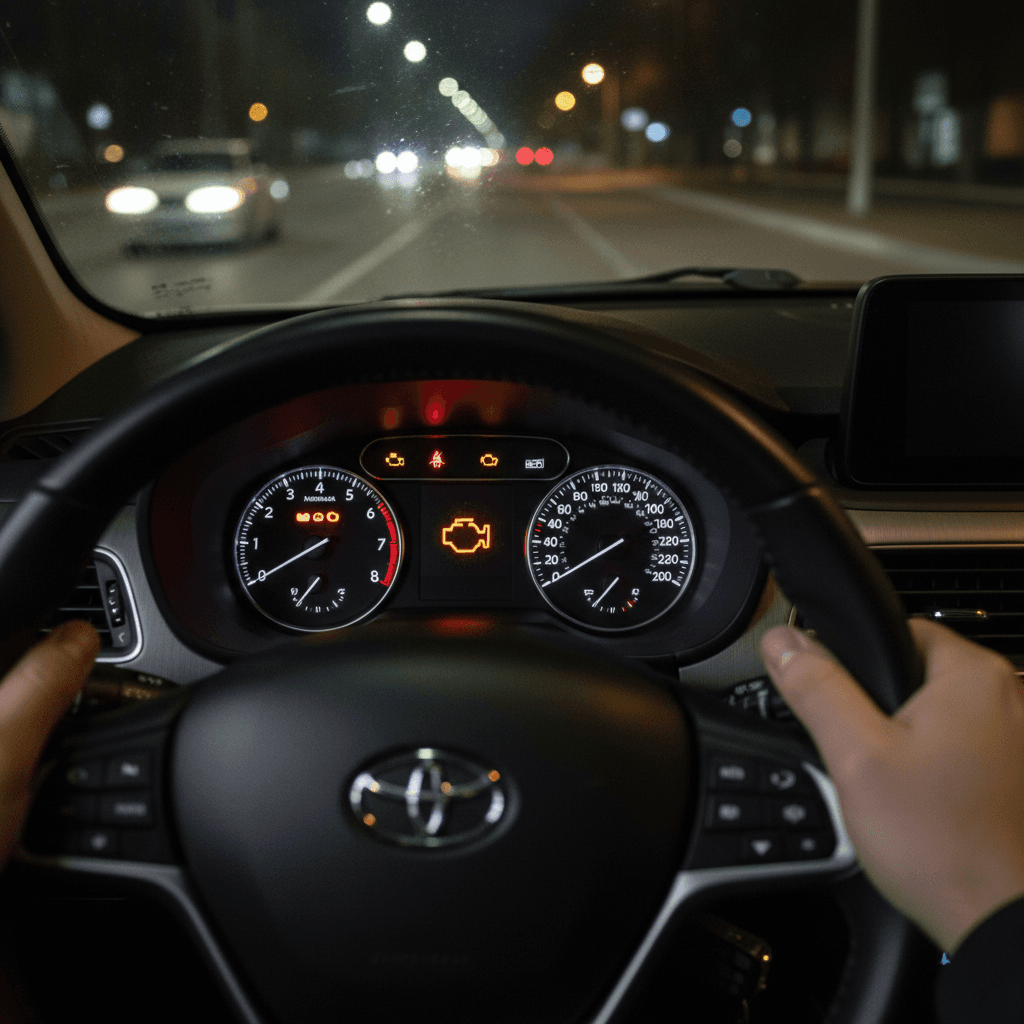
The Check Engine light (or MIL — Malfunction Indicator Lamp) is part of the OBD2 on-board diagnostic system, which has been fitted to all cars since 1996. Engine sensors continuously monitor dozens of parameters. If anything goes out of range — the system records a fault code and switches on the light.
Important: the light doesn't say "what" broke, only "something is wrong". An accurate diagnosis requires a scanner.
When to Stop Immediately
If the Check Engine light is flashing — this is a critical situation:
- The catalytic converter may be damaged
- The engine may sustain damage
- Stop, switch off the engine, call for assistance or drive directly to a workshop
If the light is on continuously (not flashing) — the situation is less critical, but you should visit a workshop within 1–2 days.
The Most Common Causes
1. Loose Fuel Cap (5% of cases)
The simplest cause — the cap wasn't tightened properly after refuelling. The fuel vapour pressure sensor detects this.
Solution: check the cap. If tightened properly, the light will go out after 1–2 trips.
2. Oxygen Sensor (Lambda Probe) — 15% of cases
The sensor measures the oxygen content in exhaust gases. Failure leads to a 15–40% increase in fuel consumption.
Symptoms: increased fuel consumption, unstable idle.
3. Catalytic Converter — 10% of cases
The catalytic converter cleans exhaust gases. Failure means an expensive repair (€300–800).
Symptoms: a quiet rattling sound, a sulphur smell from the exhaust.
4. Ignition Coils or Spark Plugs — 20% of cases
Misfires are the most common cause of a flashing Check Engine light.
Symptoms: engine shaking, poor performance, increased fuel consumption.
5. Mass Air Flow Sensor (MAF) — 10% of cases
A dirty or faulty sensor gives the fuel mix incorrect data.
Symptoms: poor acceleration, black smoke.
6. EGR Valve or Turbocharger System — in diesels
Particularly relevant for older VW, BMW diesel engines.
What Is OBD2 and How to Use It
OBD2 (On-Board Diagnostics 2) — a standard connector under the steering column. Present in all cars since 1996.
How to read fault codes:
- Buy an ELM327 adapter (€10–20 on Amazon) or at an auto parts store
- Install the free OBD Auto Doctor or Torque app on your phone
- Connect the adapter, start the engine
- The app will show codes like P0420, P0171, etc.
A code doesn't give you a ready answer — it only points to a system. For example, P0420 can mean either a faulty catalytic converter or a faulty oxygen sensor.
When to Go to a Workshop
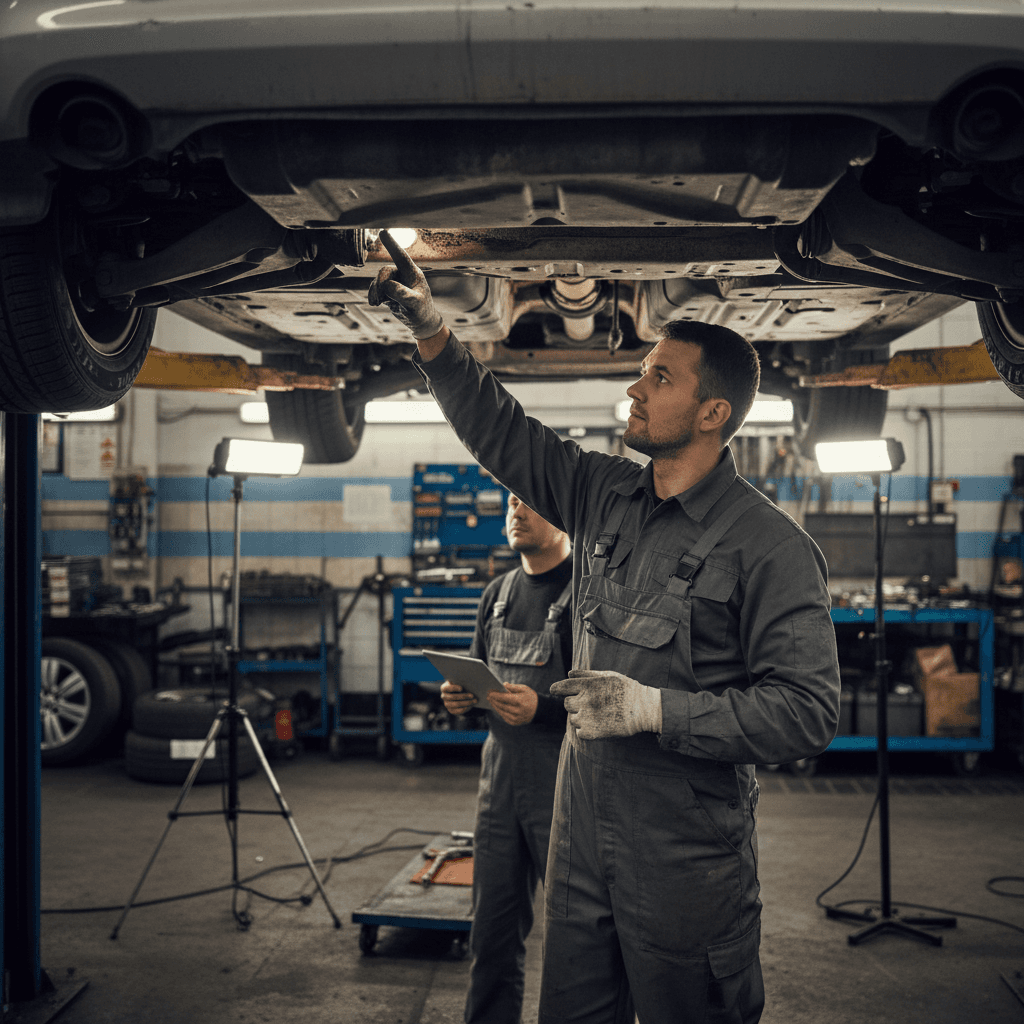
- Immediately: light is flashing, engine is shaking, car has poor performance
- Within 1–2 days: light is on continuously, no other symptoms
- Can wait until the weekend: light came on after refuelling (possibly the cap)
Most workshops in Estonia have OBD2 scanners. Reading the codes is usually free or costs €15–20.