Why Brake Pad Selection Matters
Brake pads are the only component that stops your car. Poor or incorrect pads can increase stopping distance by 20–30%, especially on wet asphalt. In Estonia, where winter roads can be slippery, this is a safety issue.
OEM vs Aftermarket
OEM (Original Equipment Manufacturer) — pads from your car's manufacturer or official supplier:
- Precise fit for geometry and specifications
- Tested by the car manufacturer
- 30–60% more expensive than aftermarket
- For BMW, Mercedes, Audi — recommended for official servicing
Aftermarket — products from branded parts manufacturers:
- Brembo, TRW, ATE, Ferodo — meet or exceed OEM quality
- Less expensive but no less reliable
- Often sold with ECE R90 certification (EU standard)
Never buy unbranded pads at suspiciously low prices — it's a safety risk.
Ceramic vs Metallic
Organic-ceramic pads:
- Quieter operation (minimal squealing)
- Less disc wear
- Effective over a wide temperature range
- Ideal for daily city driving
- Brands: Brembo Ceramic, ATE Ceramic Line
Semi-metallic:
- Better braking performance at high temperatures
- Suitable for aggressive driving and towing
- More noise and dust
- May wear discs faster
- Brands: TRW Ultra, Ferodo DS Performance
Top Brands on the Market
Brembo (Italy)
The world's most recognized braking systems manufacturer. Supplies Ferrari and Lamborghini, but also has a line for mass-market vehicles. High quality and reliability. Price: above average.
TRW (Germany / ZF Group)
Official supplier for Volkswagen Group, Ford, GM. Excellent value for money. Wide range for all vehicle types. Price: average.
ATE (Germany / Continental)
Supplier for Mercedes-Benz, BMW, Audi. Specializes in the premium segment. ATE Ceramic pads are among the quietest on the market. Price: average to above average.
Signs Your Pads Are Worn
- Squealing or squeaking — the metal wear indicator is touching the disc
- Vibration when braking — uneven wear
- Car pulling to one side — unequal wear on left vs right pad
- Soft brake pedal — may indicate air in the hydraulic system or critical wear
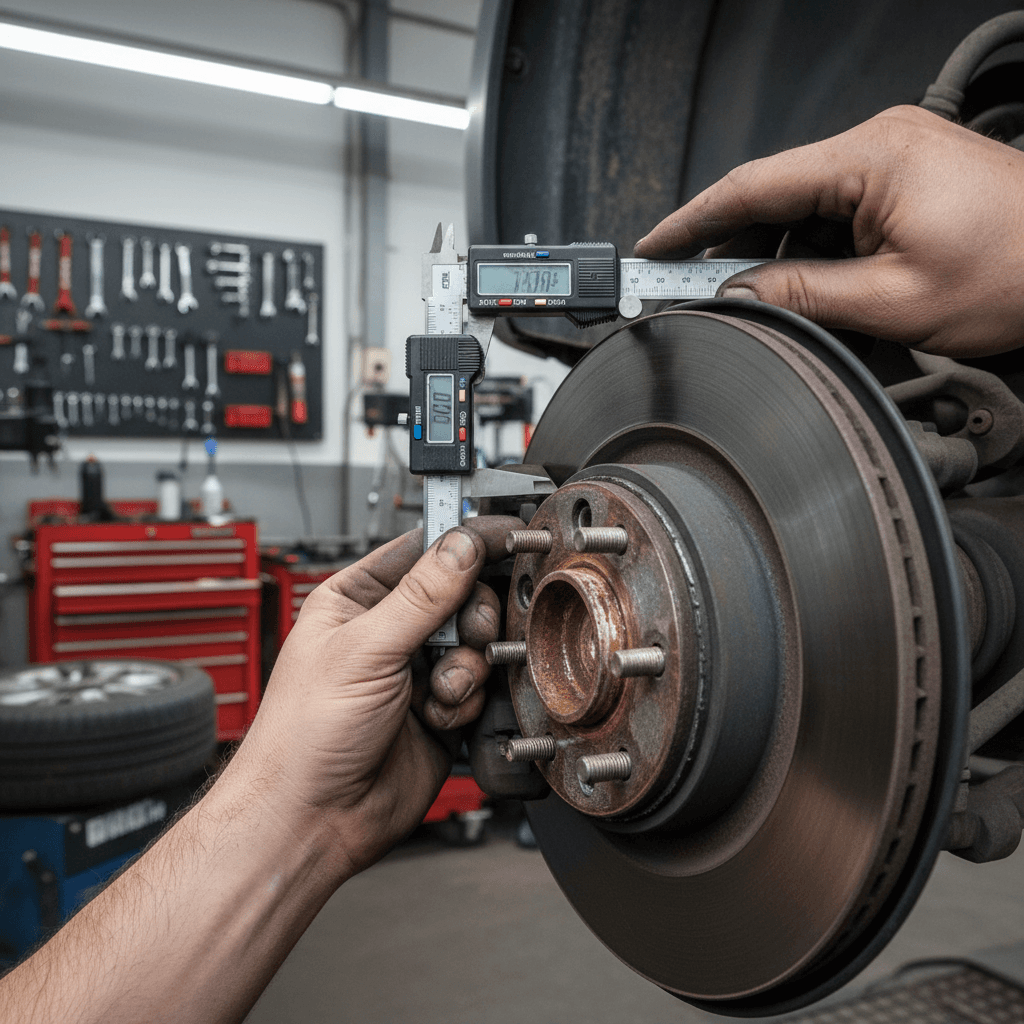
- Visually less than 3 mm thick — you can see the pad thickness through the disc
VINParts Advice
When replacing front or rear pads, always replace them in pairs (both wheels on the same axle). It's also advisable to check the condition of the brake discs — if thickness is below the minimum or there are deep grooves, the discs need replacing too.
Otto can help find the right pads for your car — just write the make and model.