Why These Mistakes Are So Common
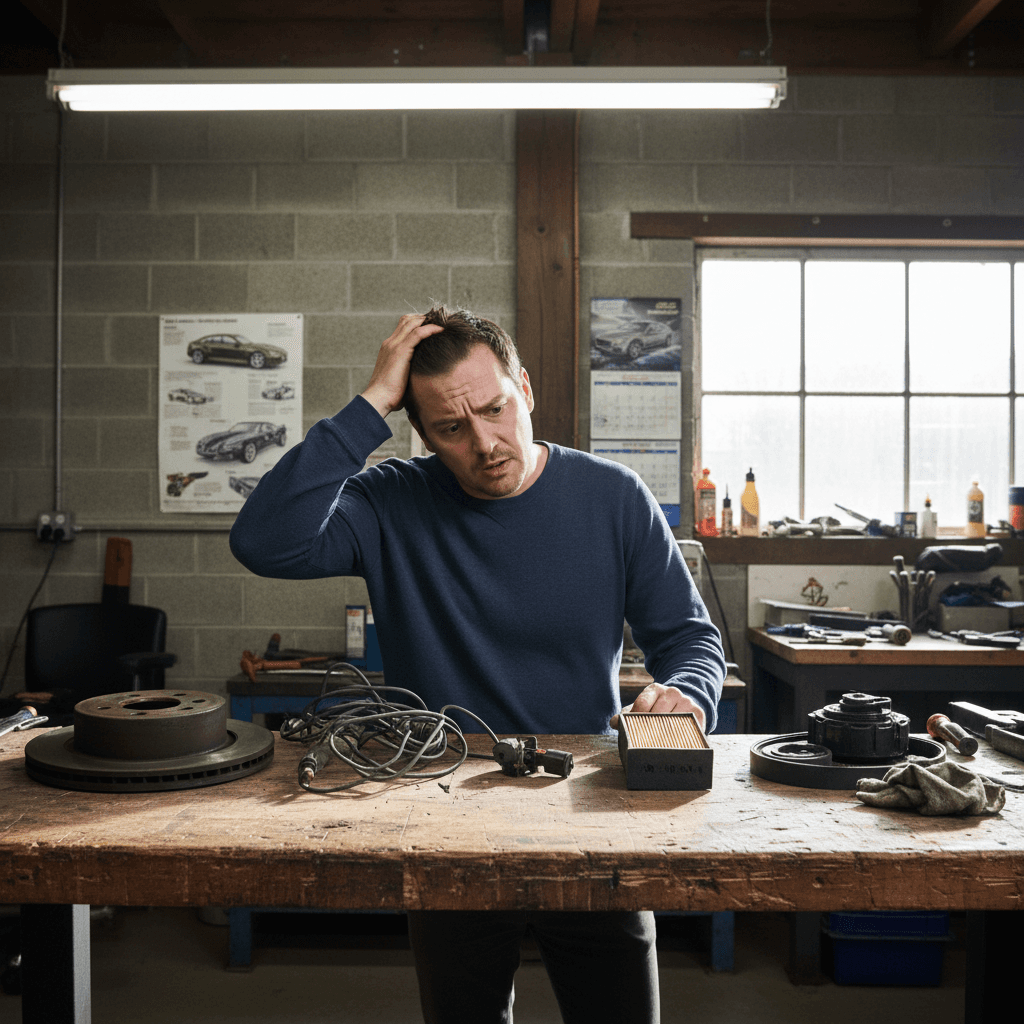
The auto parts market is one of the most complex for buyers. Thousands of manufacturers, hundreds of thousands of part numbers, and the quality gap between the most expensive and cheapest can be tenfold. We've gathered 5 mistakes made even by experienced car owners.
Mistake 1: Not Checking the OEM Number
What is an OEM number: this is the original part number from your car's manufacturer. For example, the oil filter for a BMW 3 Series is 11427512300.
The problem: the same part can have dozens of part numbers across different manufacturers (aftermarket), but all are linked to one OEM number. If you buy without checking the OEM — you risk getting a part from a different generation or one that's incompatible altogether.
Solution: always search by OEM number or through VINParts (our catalogue is linked to TecDoc — the largest compatibility database).
Mistake 2: Buying the Cheapest Option
The myth: "All auto parts are the same, the only difference is price."
The reality: there are three quality tiers:
- OEM/Premium — parts from verified manufacturers (Bosch, Febi, Gates, NGK, Valeo). Match or exceed factory specifications.
- Standard — acceptable quality at a lower price. Suitable for older vehicles.
- Noname/fakes — unbranded parts or parts with counterfeit markings. Can fail after 1,000 km.
Example: Noname brake pads for €8 vs TRW for €25. The difference in stopping distance can be 5–8 metres. At 90 km/h, that's the difference between an accident and stopping in time.
Mistake 3: Buying by Name Only, Not by VIN
The problem: even the same car model can have several modifications within a single production year. For example, a Volkswagen Golf 2015 can have a 1.2 TSI, 1.4 TSI or 2.0 TDI engine — and each requires different parts.
Even more common: facelift. Opel Astra J before 2012 and after 2012 — visually similar, but with different mounting points for headlights, bumpers and mirrors.
Solution: always provide the VIN code or full car specification (engine, transmission, production year, market). VINParts automatically filters parts for your specific vehicle.
Mistake 4: Buying Counterfeit Parts
The scale of the problem: according to EUROPOL, up to 10% of auto parts on the EU market are counterfeit. The most commonly faked: filters, brake pads, timing belts, bulbs, shock absorbers.
How to spot a fake:
- The price is suspiciously lower than everyone else's (50%+ below average)
- Packaging: blurry printing, no hologram, spelling mistakes
- The part is noticeably lighter than the original
- No barcode or QR code for verification
Where to buy safely in Estonia: official distributors, authorised shops, trusted online platforms like VINParts (we work only with verified suppliers).
Mistake 5: Not Checking Related Parts
A typical example: you replace the timing belt and forget about the tensioner roller and water pump. After 20,000 km the roller breaks — and the new belt snaps with it. Result: engine repair costing €2,000+.
The rule: when replacing any part, check the related items:
- Timing belt → rollers, water pump
- Brake pads → discs, callipers, hoses
- Shock absorbers → top mounts, dust covers
- Clutch → release bearing, flywheel
Consultant Otto will always advise which related parts to check for your request. Write to him — he'll help you avoid unnecessary costs.